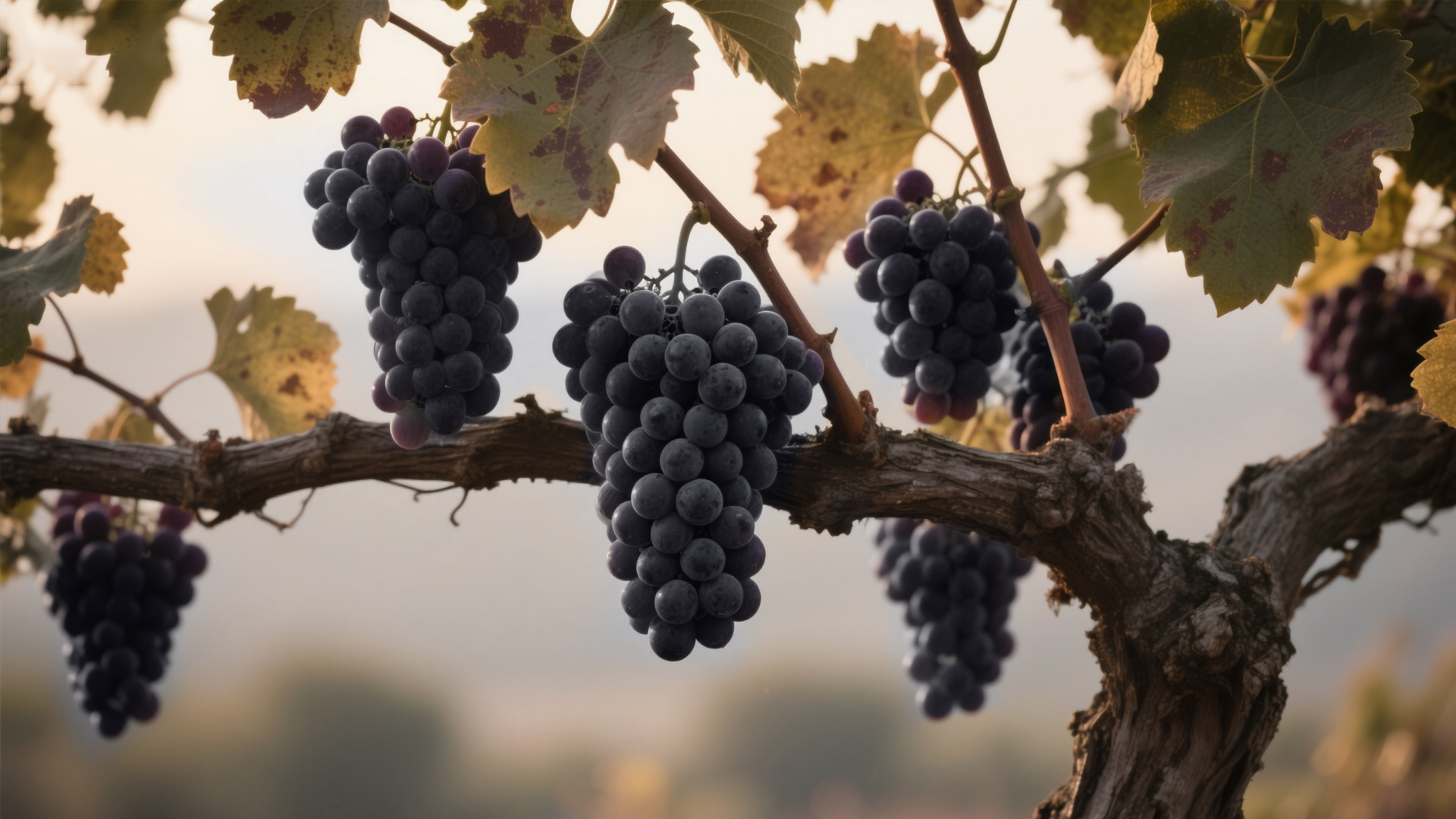




Other Names: Plant Fin, Pinot Fin, Blauburgunder, Pinot Negro, Pinot Nero, Spätburgunder, Rulandské modré, Burgundac Crni, Blauer Spätburgunder
Country of Origin: France (Burgundy)
Growing Regions: France, United States, Italy, Australia, New Zealand, South Africa, Chile, Germany
Typical Aromas: Raspberry, cherry, violet, licorice, forest floor
Pinot Noir is the noble grape of Burgundy par excellence, with a history stretching back more than two millennia.
I. Burgundian Origin
- Pinot Noir originates from Burgundy, where its first written mention dates to the 1st century AD.
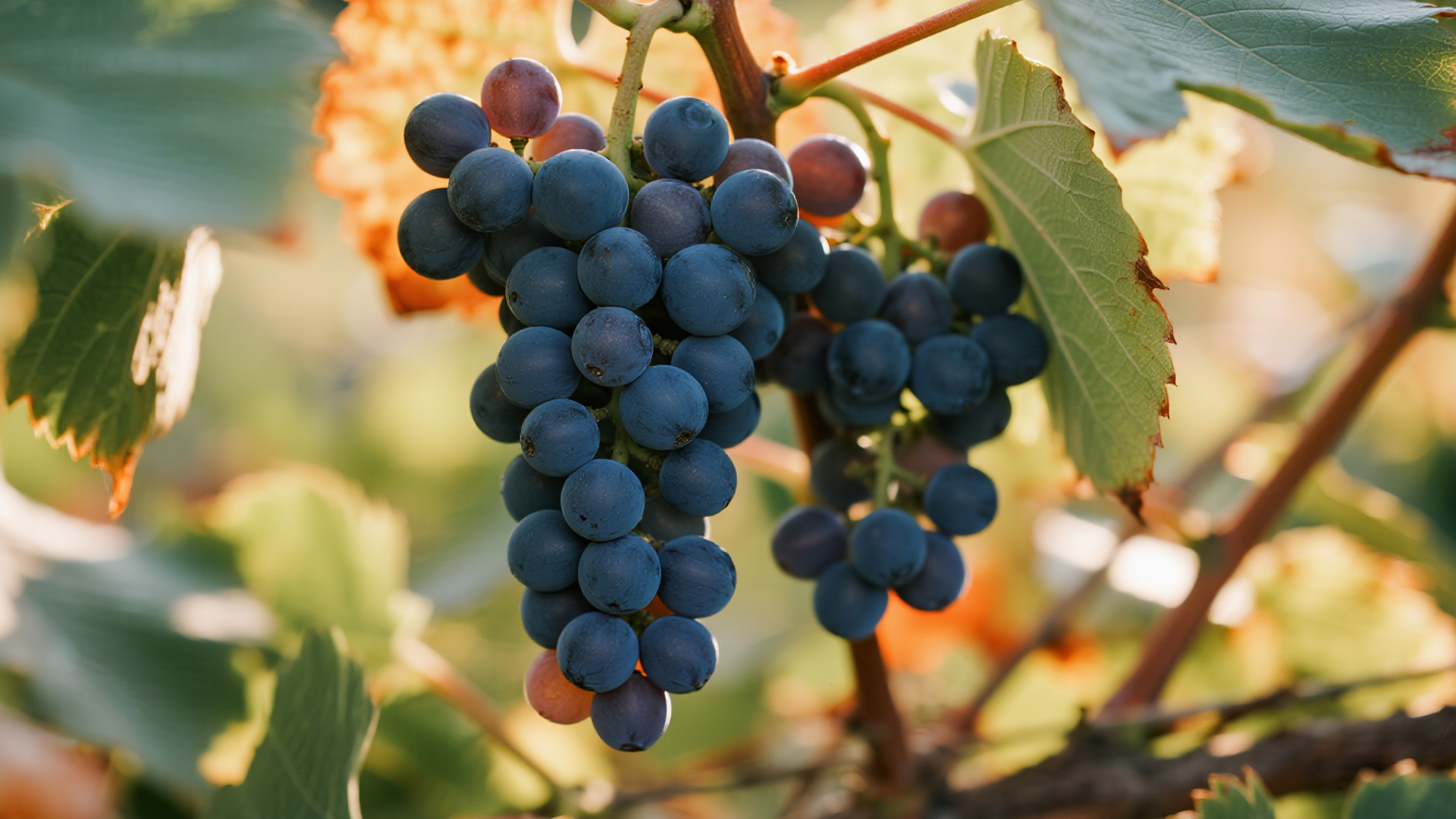
- Its name likely comes from the shape of its clusters, tightly packed like pine cones (pine in Old French).
- Burgundy, with its cool climate and limestone soils, offers Pinot Noir the ideal conditions to express its full complexity.
II. Grape Characteristics
- Pinot Noir is a thin-skinned variety with tightly packed, small berries. It is early-ripening, with low and irregular yields, making it particularly demanding to cultivate.
- Its sensitivity to climate makes it a quintessential terroir grape: in overly warm climates, it loses its characteristic acidity and finesse.
- Unlike Bordeaux varieties, Pinot Noir is very rarely blended â it is almost always vinified as a single variety, revealing the singularity of each Burgundian climat.
III. International Reach
- From Burgundy, Pinot Noir has conquered the world: California (Sonoma, Russian River Valley), Oregon (Willamette Valley), New Zealand (Central Otago, Martinborough), Germany (Spätburgunder), Chile, and Australia.
- Each region leaves its signature: Burgundy offers complexity, minerality, and aging potential; California produces more opulent, fruit-forward wines; Oregon marries Burgundian finesse with American fruit.
- Pinot Noir is also the exclusive grape of great Blanc de Noirs Champagnes, alongside Chardonnay and Pinot Meunier.
THE END



Please log in to view comments