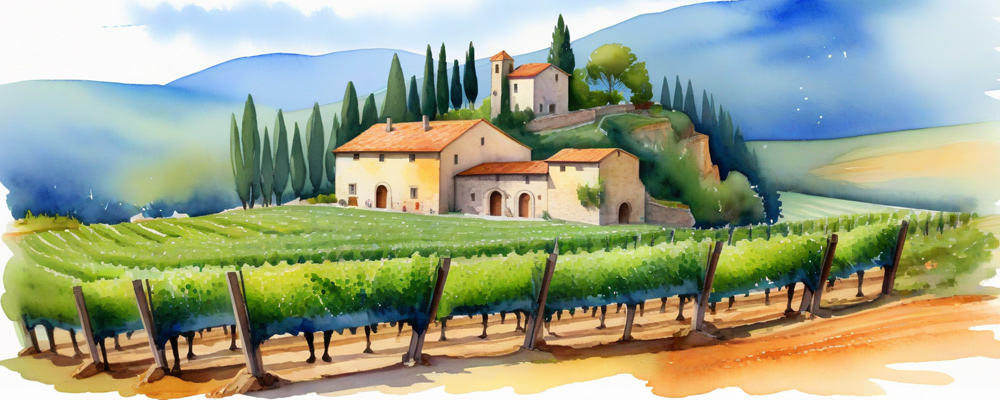




Tenuta San Guido, located in Bolgheri, Tuscany, is the legendary estate that gave birth to Sassicaia—the wine that revolutionized Italian viticulture and created the “Super Tuscan” phenomenon.
A Marquis’s Vision
- The 2,500-hectare estate dates back to the 13th century, but its destiny shifted decisively in the 1940s.
- Marquis Mario Incisa della Rocchetta, a passionate admirer of great Bordeaux wines, dreamed of creating a wine worthy of the First Growths.
- He planted Cabernet Sauvignon and Cabernet Franc vines in Bolgheri—a revolutionary choice for Italy at the time.
- The early vintages (1948–1967) were produced solely for family consumption. The 1968, presented at an international blind tasting, stunned the wine world.
Sassicaia: The Legendary Wine
- A blend of Cabernet Sauvignon (85%) and Cabernet Franc (15%), aged in French oak barriques.
- The name “Sassicaia” means “place of stones” in the Tuscan dialect, referencing the stony vineyard soil—strikingly similar to the gravels of Bordeaux.
- Sassicaia’s signature aromas: cassis, blackberry, cedar, tobacco, Mediterranean herbs, with an elegant structure and an endlessly long finish.
International Recognition
- In 1994, Italy granted Sassicaia its own DOC—DOC Bolgheri Sassicaia—a unique honor unmatched anywhere else in the country.
- Marquis Mario Incisa della Rocchetta received the “Premio alla Civiltà del Vino” in 2003, becoming the first Italian to earn this distinction.
- In 2004, Tenuta San Guido was elected a member of Primum Familiae Vini, the association of the world’s most prestigious wine families.
- Sassicaia regularly scores 95–100 points from critics and trades among the most expensive Italian wines on the market.
The Estate’s Wines
- Sassicaia: The grand vin, produced only in the finest years, approximately 150,000 bottles per vintage.
- Guidalberto: The second wine, a blend of Cabernet Sauvignon and Merlot, crafted for earlier enjoyment and broader accessibility.
- Le Difese: The entry-level wine, a blend of Cabernet Sauvignon and Sangiovese, offering an accessible introduction to the estate’s style.
THE END


Please log in to view comments