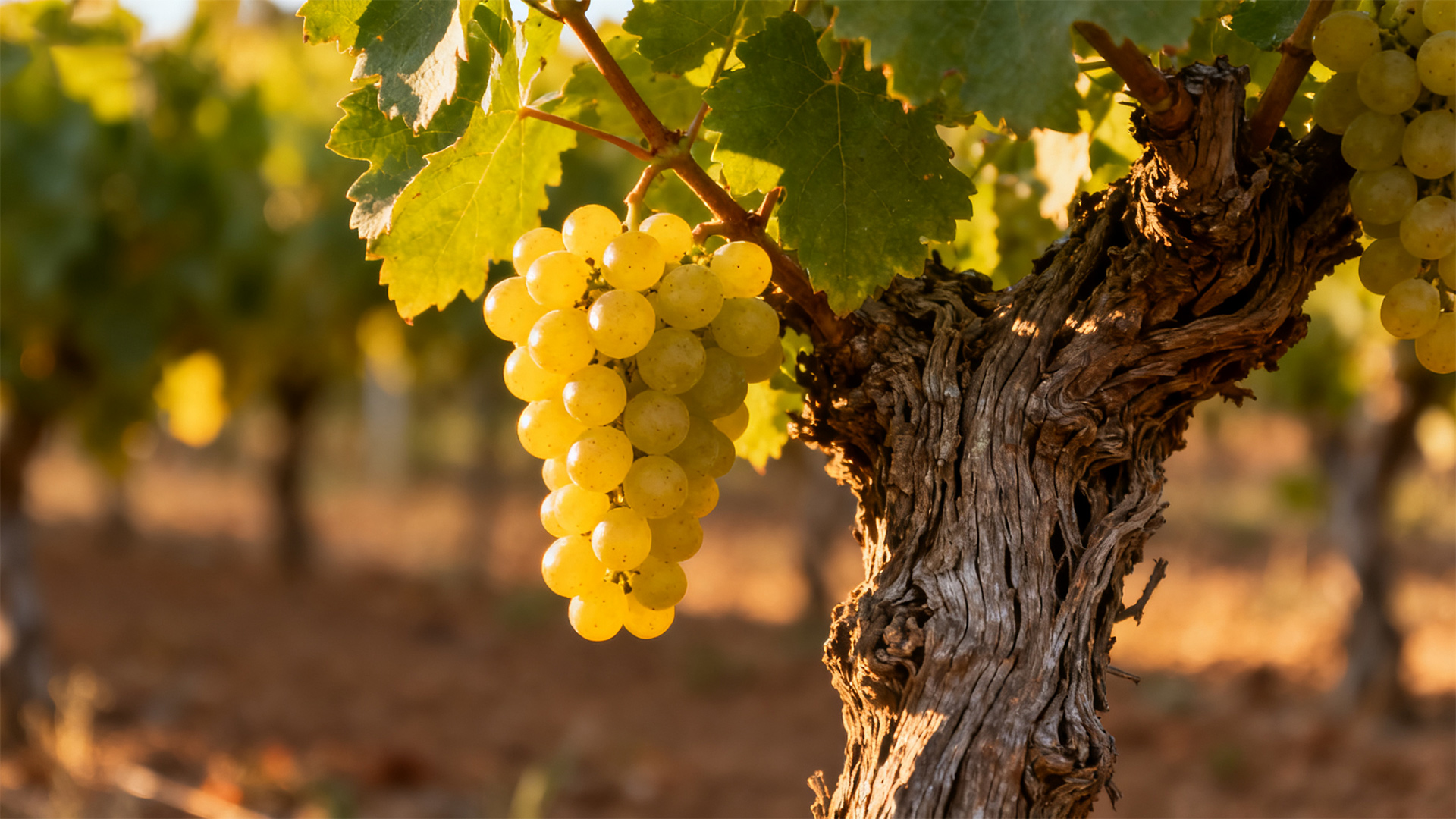




French Names: Chardonnay, Pinot Chardonnay
Other Names: Aubaine, Beaunois, Chaudenay, Epinette, Gamay Blanc, Melon d’Arbois, Morillon, Noirien Blanc, Pinot Blanc Chardonnay
Country of Origin: France (Burgundy)
Growing Regions: France, United States, Australia, Italy, Chile, South Africa, Argentina, New Zealand, Spain
Typical Aromas: apple, lemon, peach, pineapple, butter, vanilla, hazelnut, honey
Chardonnay is the world’s most celebrated white grape variety, originating from Burgundy in France.
I. Origins and Etymology
- Chardonnay traces its origins to the village of Chardonnay, located in the Mâconnais region of Burgundy.
- Born from a natural cross between Pinot Noir and Gouais Blanc, it is mentioned as early as the 17th century.
- Its name derives directly from the village of Chardonnay, whose etymology goes back to the Latin Cardonnacum.
II. History and Global Distribution
- Historically anchored in Burgundy, Chardonnay gives birth to the region’s greatest white wines: Chablis, Meursault, Puligny-Montrachet, Corton-Charlemagne.
- Introduced to California in the 19th century, it experienced an explosion of popularity in the 1970s-80s, becoming the iconic white grape of the United States.
- Today grown on every continent, it has adapted perfectly to diverse terroirs: Australian valleys, Chilean coastal zones, Argentine high plateaus, and the cool regions of New Zealand.
III. Characteristics and Wine Styles
- Chardonnay is a chameleon grape that faithfully reflects its terroir and the winemaker’s choices. Its color ranges from pale yellow to deep gold.
- Without oak aging: fresh, fruity wines with notes of green apple, lemon, pear â typical of Chablis and unoaked New World Chardonnays.
- With oak barrel aging: rich, complex wines marked by aromas of vanilla, butter, toasted hazelnut, honey â the signature of great white Burgundies and opulent Californian styles.
- Its naturally low acidity in warm climates makes it an excellent candidate for malolactic fermentation, which brings roundness and buttery notes.
THE END


Please log in to view comments