



Bordeaux is the most influential wine region in southwestern France. With its complex terroir, masterful blending tradition, and rigorous classification system, it has earned the title of “the Versailles of the wine world.” This guide covers the geography, climate, and terroir that define Bordeaux.
1. Geography and Climate: Nature’s Terroir Blueprint
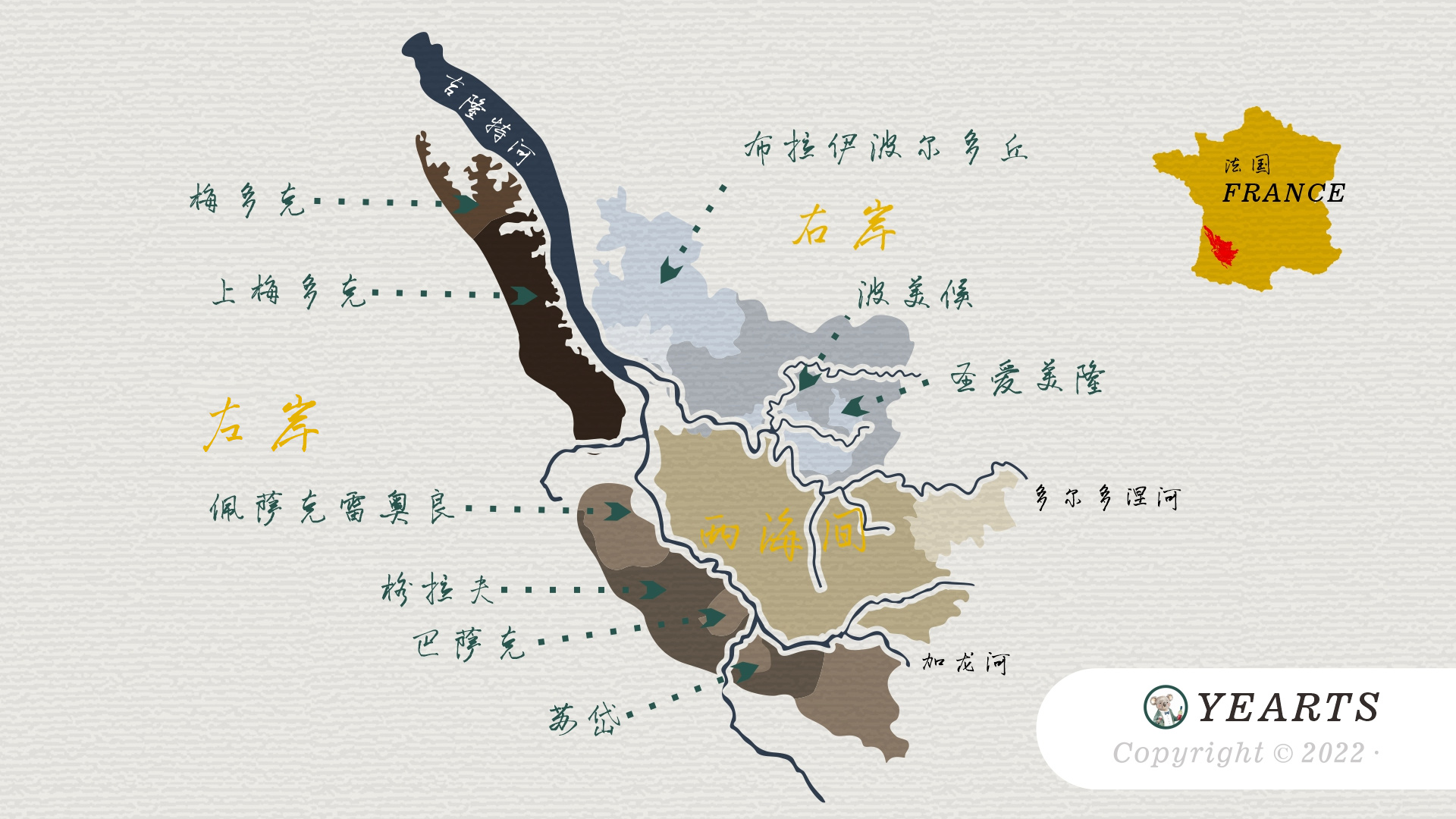
Bordeaux sits on the 45th parallel north. The Gironde estuary and its tributaries â the Garonne and the Dordogne â divide the region into three zones: the Left Bank, the Right Bank, and Entre-Deux-Mers. The temperate maritime climate is moderated by both the Atlantic Ocean and the Landes pine forest: winters are mild and frost-free, summers warm and humid, with an average annual temperature of 17.7°C. Diurnal temperature swings during the growing season can exceed 10°C, promoting sugar accumulation and flavor development. Soil diversity is Bordeaux’s core competitive edge:
-
- Left Bank: Dominated by gravel soils. In the Médoc, rounded gravel layers several meters deep provide exceptional drainage and heat retention â the ideal home for Cabernet Sauvignon.
-
- Right Bank: Clay-limestone soils dominate. Pomerol’s black clay retains moisture well, suiting Merlot’s deep root systems. Saint-Ãmilion’s limestone plateau lends the wines elegant structure.
-
- Entre-Deux-Mers: Predominantly sandy loam, producing value-driven everyday wines.


Please log in to view comments