



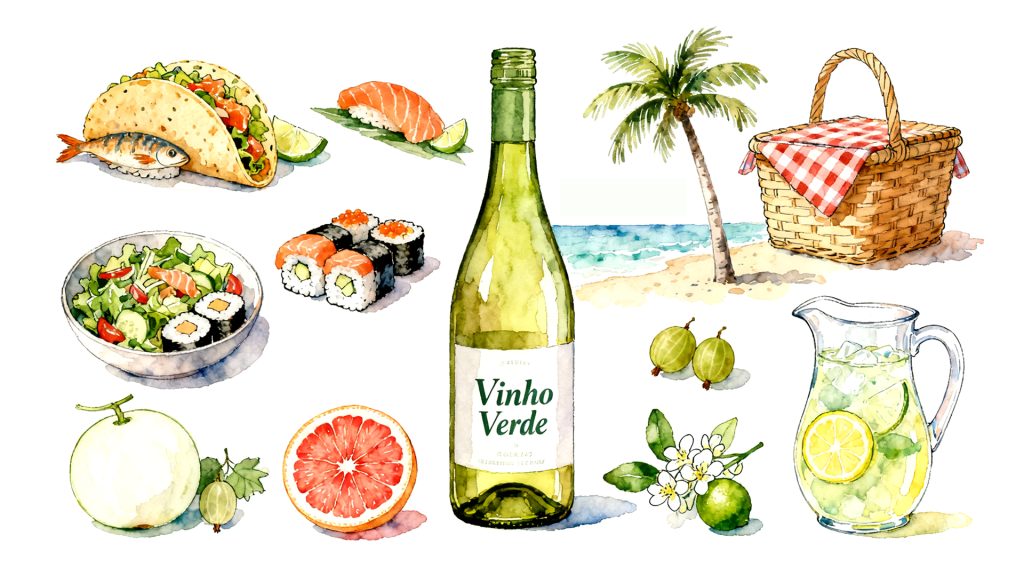
Vinho Verde (Portuguese for “green wine”) is one of Portugal’s most iconic white wine categories, defined by freshness, high acidity, light body, and a subtle natural spritz. Despite the name, the wine itself is not green â most are pale yellow to light lemon in color, with red and rosé versions showing pale ruby or pink-orange hues. The “green” refers to youthfulness and freshness: these wines are meant to be consumed young, highlighting the grape’s vibrant, lively character â like fruit caught just before full ripeness. It’s a classic summer sipper and a brilliant companion to light meals.
1. The Region: Portugal’s Cool Northwest Corner
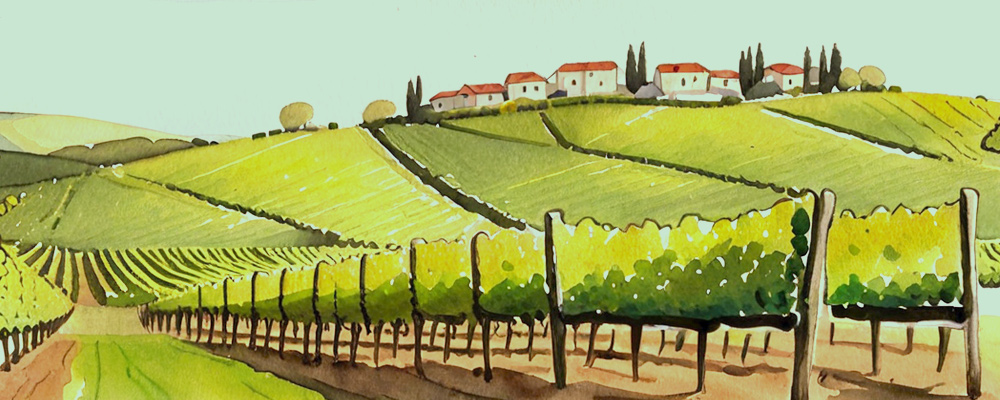
The Vinho Verde DOC is strictly limited to northwest Portugal, where Atlantic climate conditions â cool summers, moderate rainfall, and soils dominated by slate and granite â produce grapes with naturally high acidity and modest alcohol, the foundation of the Vinho Verde style. The region is divided into five key sub-regions, each with subtle stylistic differences:
| Sub-Region | Location | Core Style |
|---|---|---|
| Minho | Core region along the Minho River | Classic Vinho Verde: bright acidity, fresh aromas (citrus, green apple), predominantly white wines |
| Lima | North of Minho, Lima River Valley | More elegant, mineral-driven whites with delicate floral notes |
| Basto | Eastern area, higher elevation | Red grape varieties (notably Vinhao) shine here; red and rosé Vinho Verde more common, with soft tannins |
| Cávado | Central region, Cávado River Valley | Slightly lower acidity, rounder mouthfeel â a gentler introduction to Vinho Verde |
| Monção e Melgaço | Northernmost, near the Spanish border | Premium tier: riper grapes, slightly higher alcohol (still â¤12%), capable of short-term aging (1â2 years), with more complex tropical fruit and nutty notes |
2. Key Grape Varieties: The Freshness Engine
Vinho Verde comes in white (Branco), red (Tinto), and rosé versions, with white accounting for over 80% of production. Indigenous varieties dominate, giving the wine its unmistakable identity:
White Grapes (the main category)
- Alvarinho: The most prestigious variety and the quality benchmark. High, piercing acidity with intense aromas of lime, lemon, white peach, minerality, and subtle florals. Crisp and precise on the palate. The backbone of premium Vinho Verde from Monção e Melgaço.
- Loureiro: The most “aromatic” variety, known for pronounced citrus (tangerine peel), herbal (mint, fresh grass), and white flower (jasmine) notes. Moderate acidity, light body. Often blended with Alvarinho for aromatic complexity.
- Trajadura: The softest variety â lower acidity, with green apple and pear fruitiness. Adds roundness to blends, softening Alvarinho’s sharp edge.
- Azal Branco: Extremely high acidity with distinctive mineral and green vegetal notes (asparagus, green bell pepper). A niche variety used mainly in blends for structure and acidity.
Red / Rosé Grapes (smaller share, distinctive)
- Vinhao: The core red Vinho Verde grape. Thin-skinned, soft tannins, bright acidity, with red cherry and strawberry fruit notes and subtle violet florals. Light ruby color, refreshingly light-bodied. Espadeiro
- Espadeiro: Often blended with Vinhao, contributing raspberry and red plum fruitiness. Rosé versions are typically made from this variety via short skin contact, yielding pale pink wines with balanced sweetness and acidity.
2. Vinification: How Vinho Verde Gets Its Signature Freshness
- Low-temperature fermentation: Fermentation at 12â16°C (white grapes) or 16â18°C (red grapes). The slow, cool ferment preserves fresh fruit character â citrus, red berries â while preventing cooked or stewed flavors.
- Short maceration (red grapes): Red Vinho Verde sees just 12â24 hours of skin contact, far less than the days-to-weeks typical of conventional red wines. The result: barely-there tannins, pale color, and a light, lifted feel.
- Subtle spritz (Pétillance): Some Vinho Verde retains trace carbon dioxide from fermentation (not fully degassed), giving it a gentle, soda-like prickle on the tongue. This is a classic Vinho Verde hallmark, though not every bottle has it â some are fully still.
- Early bottling and low alcohol: Grapes are picked at lower ripeness to preserve high acidity. Alcohol typically ranges from 8.5% to 11.5% (well below the 12%â14% of standard wines). The wine is bottled within 1â3 months of fermentation, bypassing oak entirely (a few premium wines see short stainless steel aging), fully preserving youth and vibrancy.
- Distinctive bottle: Vinho Verde often comes in squat, short-necked bottles (500ml or 750ml). While some traditional producers still use cork with wire cages (Champagne-style), most modern bottlings use screwcaps for freshness.
4. Tasting Profile and Serving Tips
1. White Vinho Verde: typical flavor profile
- Aromas: Green and fresh â citrus (lime, lemon), white fruits (green apple, white peach), herbs (mint, cut grass), white flowers (jasmine, honeysuckle). Premium Alvarinho-based wines often show wet-stone minerality.
- Palate: High acidity is the soul of Vinho Verde. Light, crisp, thirst-quenching, sometimes with a gentle spritz. The finish is short, clean, and fruit-driven.
2. Red and Rosé Vinho Verde: typical flavor profile
- Red Vinho Verde: Pale ruby. Aromas of red berries (cherry, strawberry, raspberry) with faint violet and herbal notes. Tannins are nearly imperceptible, acidity is bright. The mouthfeel is like drinking fruit juice â but dry.
- Rosé Vinho Verde: Pale pink, even fresher aromas (white peach, watermelon), medium acidity. Mostly dry (a handful are off-dry). Perfect for those who avoid tannins.
3. Key serving recommendations
- Serving temperature: White Vinho Verde at 6â8°C (serve well-chilled to maximize refreshment). Red and rosé versions at 8â10°C (lightly chilled; avoid over-chilling which mutes the fruit).
- Drinking window: Vinho Verde is best within 1 year of bottling â the fresher, the better. Aging is not recommended (premium Alvarinho can hold 1â2 years but loses vibrancy over time).
- Food pairings: Vinho Verde is a versatile food wine. The golden rule: pair with light, non-heavy dishes.
- Best matches: Seafood (steamed fish, oysters, scallops, shrimp, ceviche), shellfish (clams, mussels) â high acidity cuts through brininess, light spritz balances richness.
- Good matches: Light fare (salads, sandwiches, pizza without heavy cheese), Mediterranean dishes (olive-oil-roasted vegetables, hummus), Asian cuisine (Thai green curry, Japanese sushi and sashimi).
- Avoid: Heavy, intensely flavored foods (braised pork belly, spicy hot pot, triple-cream cheeses) â high acidity amplifies heat, and the wine’s delicate body gets drowned out by rich dishes.
5. Common Myths About Vinho Verde
“Vinho Verde is sweet”? Wrong. Over 90% of Vinho Verde is dry (Seco). Only a few low-end bottlings are off-dry (Demidulce) or sweet (Doce). Look for “Seco” on the label to confirm dryness.
“Vinho Verde is cheap wine”? Not entirely accurate. While plenty of affordable options exist (Â¥50â100), premium examples â especially single-variety Alvarinho from Monção e Melgaço â can reach Â¥300â500. These wines show genuine complexity and reward attentive tasting.
“Vinho Verde = white wine”? Wrong. Vinho Verde comes in white, red, and rosé. White dominates production, but red and rosé Vinho Verde, with their low tannins and high acidity, are popular summer choices in their own right.

Please log in to view comments